
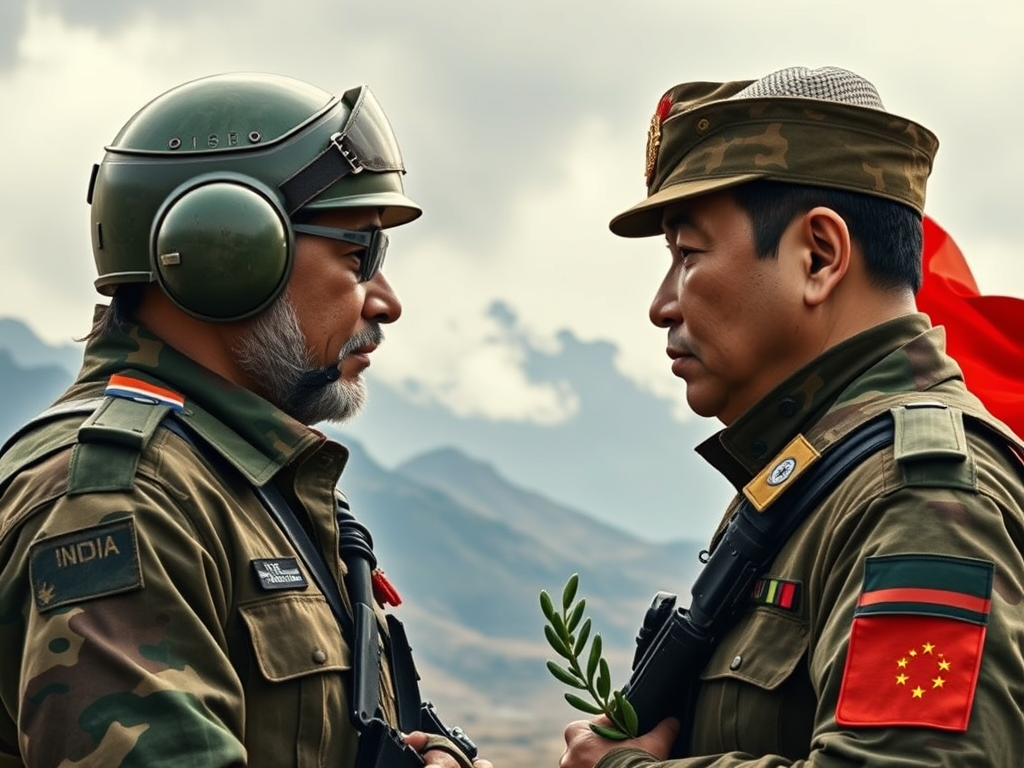

The timeline begins with a significant escalation in 2020 when a deadly clash at Galwan Valley in eastern Ladakh led to the deaths of 20 Indian soldiers and at least four Chinese soldiers. This incident marked the most severe military confrontation between the two countries in decades, freezing diplomatic relations and halting high-level talks. The standoff at the Line of Actual Control (LAC) saw a massive military buildup, with both nations deploying tens of thousands of troops, leading to a prolonged state of heightened tension.
Over the last five years, the relationship between India and China has been characterized by a blend of military standoffs, diplomatic engagements, and an underlying strategic rivalry, all set against the backdrop of a contentious border dispute.
The timeline begins with a significant escalation in 2020 when a deadly clash at Galwan Valley in eastern Ladakh led to the deaths of 20 Indian soldiers and at least four Chinese soldiers. This incident marked the most severe military confrontation between the two countries in decades, freezing diplomatic relations and halting high-level talks. The standoff at the Line of Actual Control (LAC) saw a massive military buildup, with both nations deploying tens of thousands of troops, leading to a prolonged state of heightened tension.
The border issue, unresolved since the 1962 Sino-Indian War, has remained the focal point of contention. Despite numerous rounds of military and diplomatic talks, including the establishment of a Working Mechanism for Consultation and Coordination on India-China Border Affairs, tangible progress on disengagement was limited. This impasse not only strained bilateral ties but also had broader implications for regional security and economic cooperation
However, 2024 brought signs of a cautious thaw. After a four-year hiatus, in October of that year, Indian Prime Minister Narendra Modi and Chinese President Xi Jinping met on the sidelines of the BRICS Summit in Russia, their first formal meeting since the 2020 clash. This meeting followed a border agreement aimed at resolving the ongoing military standoff, which included resuming patrols in Ladakh and disengaging troops to restore positions to pre-crisis levels. This diplomatic outreach was seen as a step towards de-escalation, although deep-seated differences persisted.
Economically, despite political tensions, trade between India and China continued to grow, albeit with an increasing trade deficit favoring China. India’s export basket remained limited, while China’s exports to India, particularly in electronics and machinery, saw significant increases. The trade relationship, while robust, became a point of contention, with India implementing measures to curb non-essential imports from China and scrutinizing Chinese investments more closely.
In terms of regional diplomacy, India’s strategic maneuvers, including strengthening ties with the U.S., Japan, Australia through the Quadrilateral Security Dialogue (QUAD), and enhancing relations with other Southeast Asian nations, have been perceived by China as efforts to contain its influence. Conversely, China’s deepening engagements with South Asian countries, particularly Pakistan, and its Belt and Road Initiative have been points of concern for India.
The year 2025 started with posts on X highlighting a continued effort towards normalization. The agreement and high-level talks in 2024 hinted at a gradual improvement, though with a clear understanding that the relationship would remain competitive. The complexities of managing border disputes while fostering economic ties and navigating international alliances continue to define India-China relations, with both nations seemingly aware of the high costs of sustained conflict but also the strategic benefits of cooperation.
In summary, the last five years of India-China relations have been a narrative of strategic competition, security concerns, and an attempt to find a new equilibrium in their bilateral dynamics. While there are signs of a thaw, the path forward remains fraught with challenges, requiring both nations to balance national interests with regional stability.