

In Bangkok and Phnom Penh, long-simmering territorial rivalries have been
entwined with ‘aggressive’ nationalism. Thailand’s military sees itself as the
guardian of the monarchy and nation, and even routine politics can trigger royalist
backlash. Pro-military parties openly campaign on “loyalty to the monarchy” and
national unity. In June 2025, for example, Yellow Shirt royalist protesters
demanded the resignation of Prime Minister Paetongtarn Shinawatra for allegedly
being too conciliatory toward Cambodia. In Cambodia, leaders similarly invoke
history, former strongman Hun Sen reminded his followers that “this poor
Cambodia has suffered from foreign invasion, war and genocide… but now
Cambodia has risen on an equal [footing] with other countries.”
After more than a century of unresolved border lines, famously cemented by the 1962 ICJ ruling on
Preah Vihear temple, any clash readily ignites nationalist fervour on both sides.
In July 2025, five days of heavy fighting around Preah Vihear left about 50 people
dead and forced 300,000 from their homes before ASEAN brokers managed to
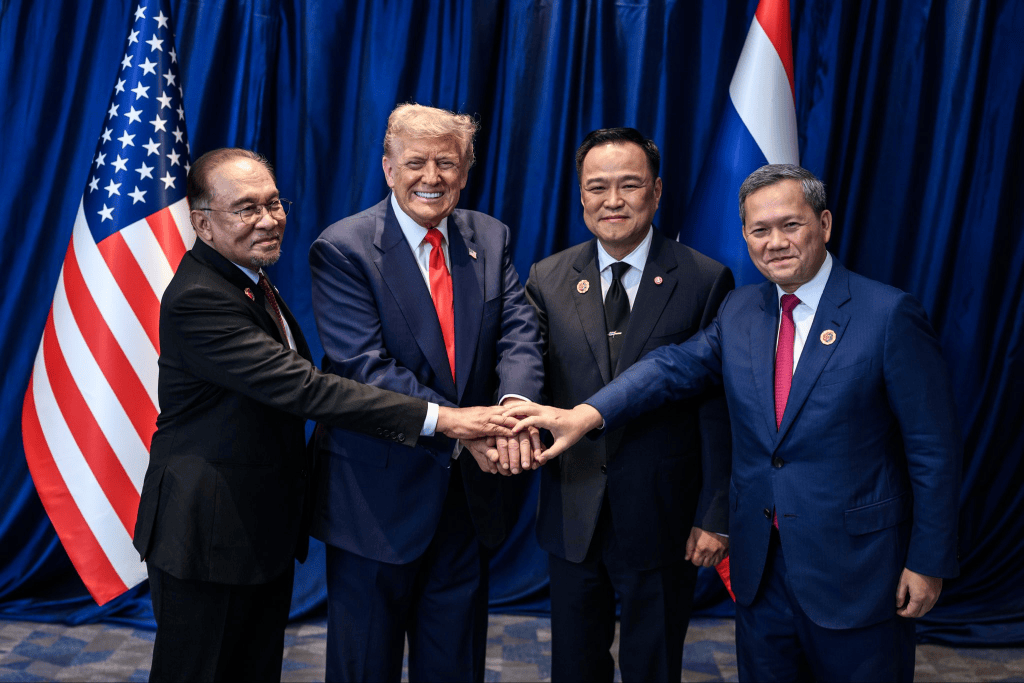
impose a ceasefire. Hopes for stability rose briefly on October 26 when U.S.
President Donald Trump helped preside over a new peace accord in Kuala Lumpur
intended to expand that earlier truce. However, the situation deteriorated in
November after Thailand unilaterally suspended the agreement, citing an incident
where a Thai soldier was maimed by a mine laid just across the disputed boundary.
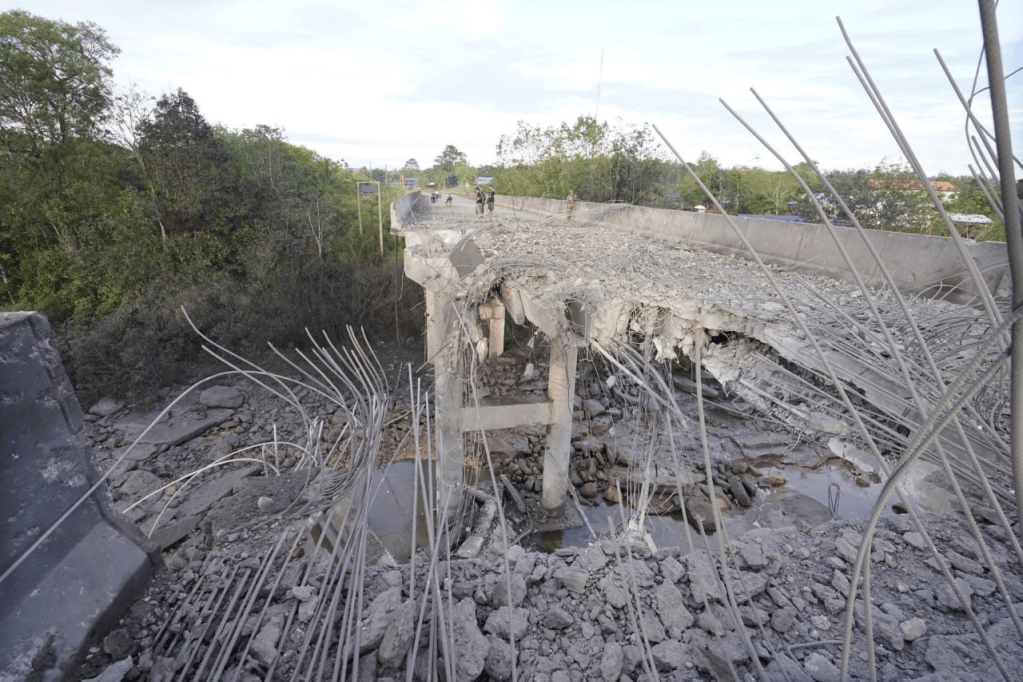
By December 7, the conflict had reignited aggressively as Thai F-16 and Gripen
fighter jets struck Cambodian positions amid heavy artillery and rocket exchanges,
once again sending hundreds of thousands of civilians fleeing for safety.

In the latest clashes, both governments leapt to tough stances. Thai Prime Minister Anutin Charnvirakul vowed to “do whatever necessary to protect [Thailand’s] territorial integrity” and flatly refused diplomacy with Phnom Penh. “There will be
no talks. If the fighting is to end, (Cambodia) must do what Thailand has set,” he told reporters. Cambodia’s defense ministry immediately blasted Thailand in its
own communique, “strongly condemn[ing] Thailand’s violations” and demanding Bangkok “take full responsibility” for what Phnom Penh called aggression.
Cambodia’s Hun Sen (now retired) urged his troops to stay cool, “All frontline forces must remain patient because the aggressors have been firing all kinds of weapons,” he wrote on social media.

In Phnom Penh, Prime Minister Hun Manet
denounced Thailand’s action as “unprovoked and premeditated military
aggression” (Cambodian forces had only “respond[ed] in self-defense”).
Fresh fighting by December 8 caused casualties among both Thai soldiers and
Cambodian civilians, prompting the evacuation of nearly half a million people
from border provinces. The intensity of the skirmishes drew immediate
international concern, with ASEAN and UN leaders urging both sides to de-
escalate and exercise restraint.
Military Edge and External Influences
Thailand clearly holds the military advantage. Its armed forces are several times
larger and better equipped than Cambodia’s military capabilities. News analyses
note Thailand fields hundreds of modern aircraft (Saab Gripens and U.S. F-16s)
and has “far greater military resources” overall. Thailand has a significantly
stronger military presence, ranking 25th globally (3rd in ASEAN) compared to
Cambodia’s 95th position. Bangkok’s defense budget, approximately $5.9 billion,
is also more than seven times greater than the budget of Phnom Penh.

Even Cambodia’s heavy rocket artillery like Chinese PHL-03 and older Soviet BM-21s,
are vulnerable to Thai air strikes. The unmistakable shadow cast by the deployment
of fighter jets serves as a stark, aerial depiction of Thailand’s prevailing military
position over its neighboring state.
Cambodia has been enjoying a close relationship with Beijing has offered to
mediate the border crisis, calling the two sides to dialogue and pledging help (even
demining assistance) to restore trust. Chinese Foreign Minister Wang Yi met his
Thai and Cambodian counterparts to promote negotiations, and China’s diplomats
shuttled back and forth observing ceasefire monitoring. But analysts point out that
China is especially close to Cambodia. Newsweek notes Cambodia gave China
access to a Cambodian naval base on the Gulf of Thailand, and Beijing provides
generous economic and military backing. Cambodia has procured significant
Chinese upgrades (naval facilities, aid), whereas Thailand still relies largely on
Western suppliers. In effect, Thailand’s air strikes are U.S.-made aircraft
“pounding” targets, while Cambodia fields predominantly Chinese/Russian
artillery.
For the United States, the border fight is a diplomatic embarrassment. A senior
U.S. official reiterated on Dec. 8 that “President Trump is committed to the
continued cessation of violence” and expects both governments to honor their
ceasefire commitments. This underscores Washington’s recent leverage: earlier
threats of sanctions and tariffs had pressured Bangkok and Phnom Penh into talks.
But the U.S. brokered deal, even with Trump’s personal involvement at ASEAN
has unraveled. Analysts say the accord was “forced” by external pressure and
never enjoyed genuine buy-in. In that view, Thailand’s generals “were not happy”
about a foreigner (Trump) stepping in, while both governments still capitalize on
nationalist rhetoric at home.
Nationalism, Politics and the Credibility of Peace
The fighting is as much about politics as territory. In Thailand, politicians tread
gingerly around the military–monarchy nexus. In practice the army defines itself as
the guardian of the King and nation above all. Critics point out that any hint of
softness toward Cambodia can end a career. In recent months Prime Minister
Paetongtarn Shinawatra has been investigated (and her coalition shaken) over a
phone call with Hun Sen. Historian analysis reminds us that this pattern is nothing
new, in 2006 the army deposed Prime Minister Thaksin Shinawatra after Yellow-
shirt protesters accused him of being “disloyal to the monarchy”. Similarly, the
country’s Constitutional Court removed Yingluck Shinawatra in 2014 for allegedly
weak-kneed foreign policy. The current PM Anutin played to that sentiment by
publicly branding Cambodia an “adversary”. In short, Thai leaders face intense
pressure to adopt a hard line, a “heightened nationalism” as some analysts say, lest
they face street protests or legal troubles.
The singular power structure holding sway in Cambodia, steered by the enduring
influence of Hun Sen and now his son, Hun Manet, has cultivated a mirror image
of this intensity. A decidedly aggressive and uncompromising official narrative
surrounding the fraught geography of territorial disputes. Phnom Penh routinely
emphasizes past sieges from French colonization to Vietnamese invasions to rally
its citizens. Cambodia’s media and military officials warn that they will “stand
fully prepared to defend [their] sovereignty…at any cost” against foreign
incursions. The political system gives their leaders little domestic opposition,
allowing belligerent messaging to go unchecked. Hun Sen himself celebrated the
current dispute as a stand against Thai “territorial violation,” calling on
Cambodians to guard the border firmly. In both countries, therefore, nationalist
fervor works its way into official policy, making restraint difficult.
This toxic mix of distrust, armed interests and politics raises serious questions
about the value of cursory peace deals. Even as Trump touted the Kuala Lumpur
accord (social media post that it had “saved thousands of lives”), observers note
the agreement had no enforcement mechanism and was repeatedly violated soon
after its signing. Few commentators remarked that the ceasefire was “forced” by
U.S. pressure and unpopular with the Thai military, so it could not root out the
underlying mistrust. As few analysts put it, Trump has claimed credit for ending
several conflicts, but many of those cease-fires have “not survived” in practice.
The debacle on the Thai–Cambodian border now tests that observation, within
weeks of the grand ASEAN summit in Trump’s presence, both Bangkok and
Phnom Penh have reverted to hostility.
Looking ahead, few believe rhetoric alone can bridge the gap. The ground situation
suggests that if nationalist narratives and territorial suspicions remain unaddressed,
the clashes could deepen. The founder of Cambodian think tank Future Forum says
“We’re now going to see, potentially, much longer, much deeper fighting,” and our
cautioned, saying that mutual distrust is so entrenched that mere ‘jargons of peace’
will fail. In practice, a lasting solution would demand genuine de-escalation on the
ground (troop withdrawals, mine clearance) and political courage in both capitals
steps neither side has fully taken. For now, the brief holiday truce has collapsed,
and with it the illusion that a headline accord could overwrite decades of
grievances. As one U.S. diplomat dryly noted, the situation underscores that in this
corner of Asia “talks about peace” must be backed by far more than diplomatic
photo-ops.