
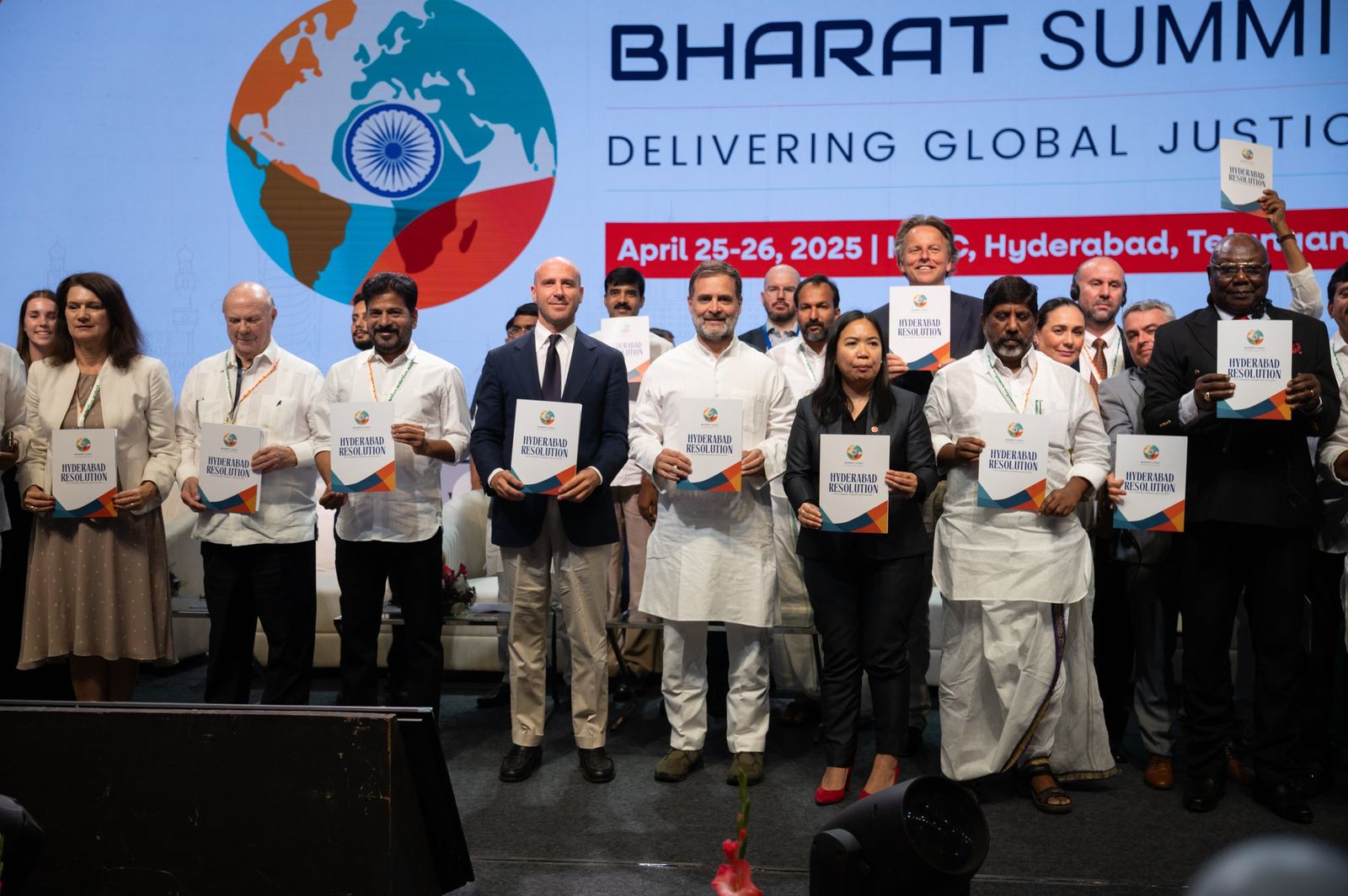
Representatives of centre and centre left political parties from over 100 countries adopt the Hyderabad Resolution: what could this mean for the global progressive movement?
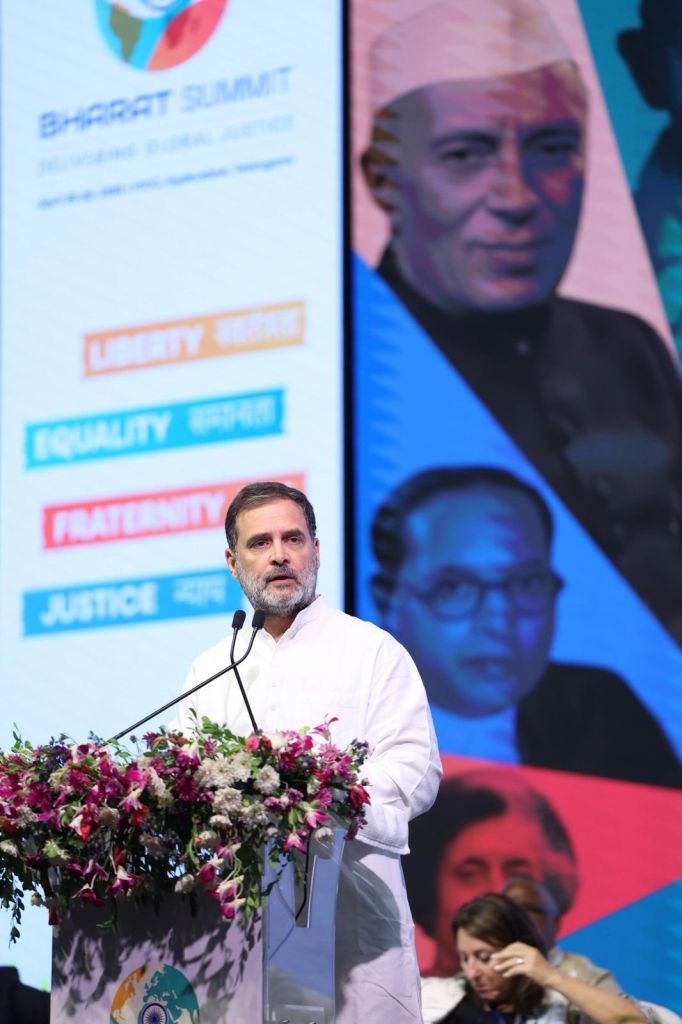
In what is probably one of the first of its kind conference, the Telangana Government hosted the first edition of the Bharat Summit- a global conference bringing together over 450 delegates representing progressive parties from 100 countries to ‘deliver global justice’.
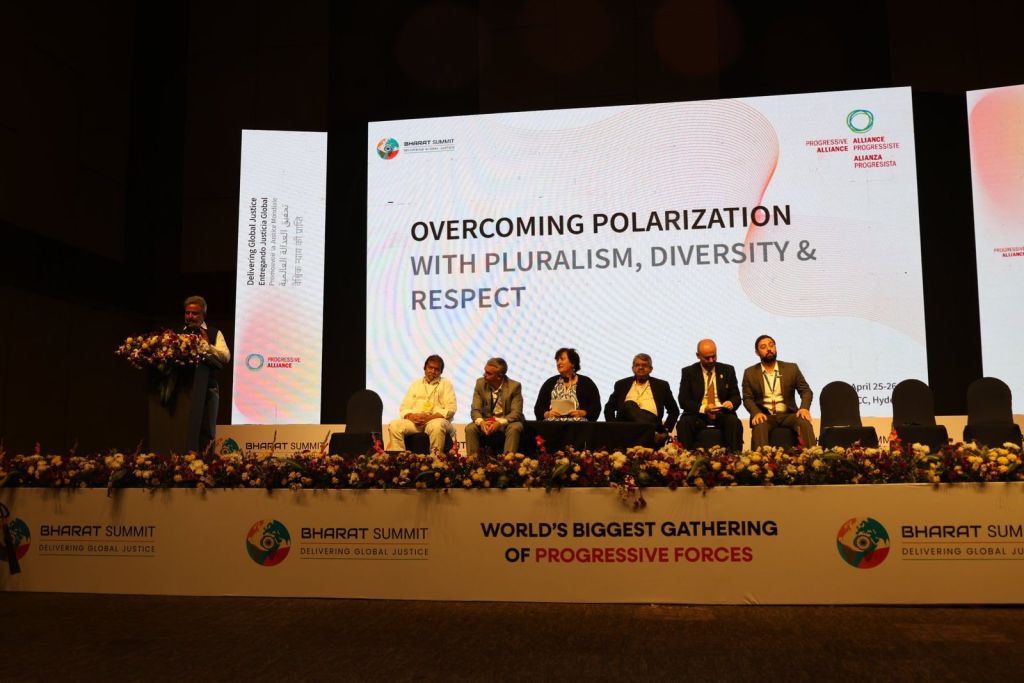
The aim of the Summit, which included incumbent and former ministers from EU, Africa and Asia and the US as well heads of political parties and think tanks, was to rethink and deliver global justice- social, economic, ecological and geo-political.
For the first time, international alliances like Progressive Alliance, Progressive International, NAM, SocDem and others shared a stage to address common threats and concerns facing countries globally.
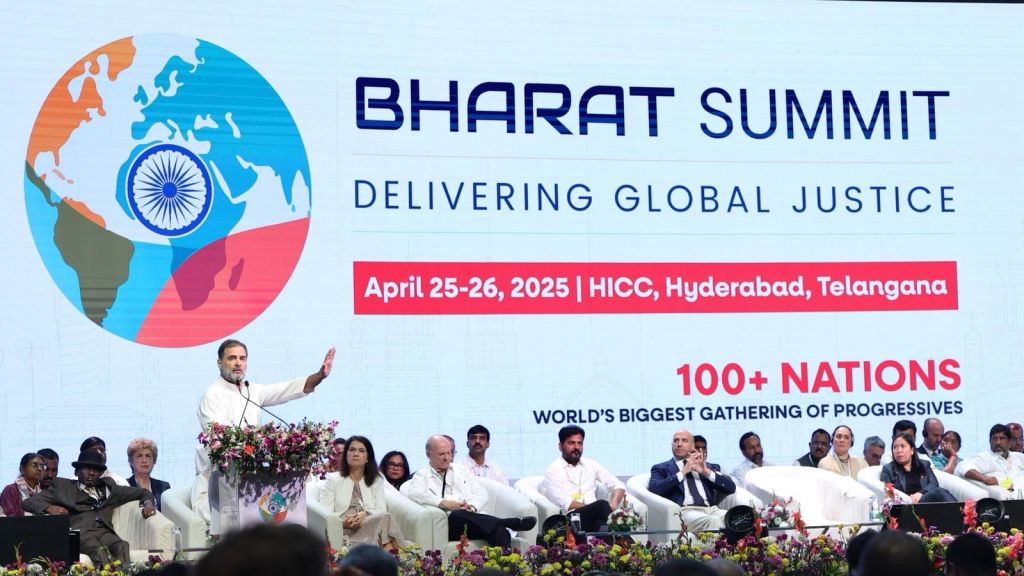
The Hyderabad Resolution, adopted in the presence of senior INC leader Rahul Gandhi as well as leaders from several other countries like Australia, Germany, Sweden, Argentina and multiple African countries reaffirmed the commitment of the “progressive forces, social-democratic, socialist, and labour movements from around the world, to the values of freedom, equality, justice, and solidarity” while laying out a roadmap and a shared common vision for countering the the erosion of democratic values that is evident in several countries under autocratic and far right leadership.
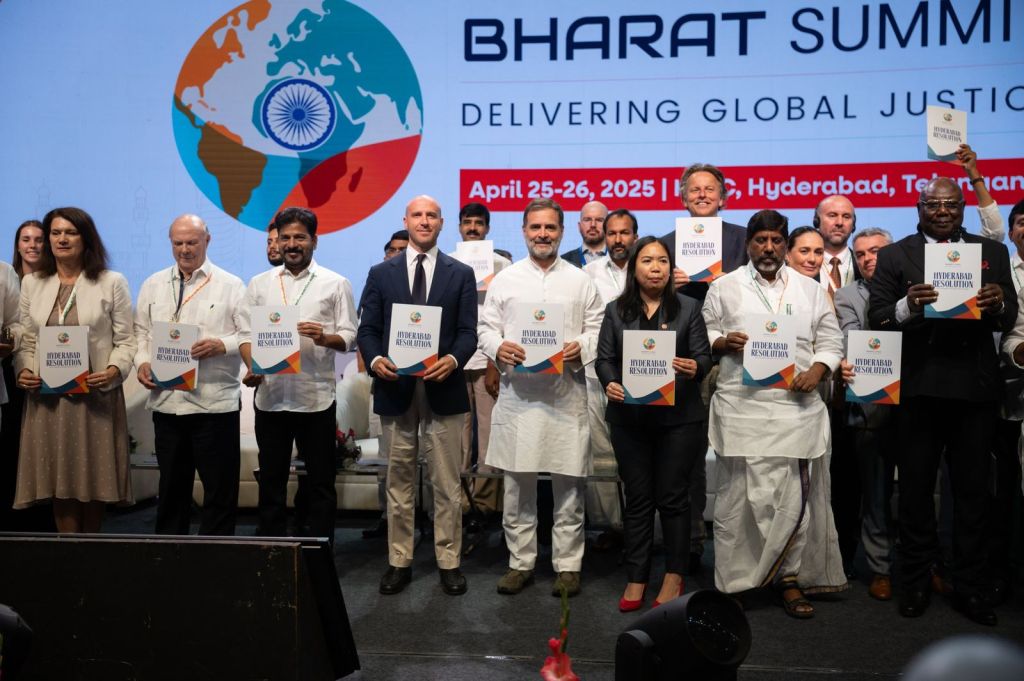
Underscoring the common concerns of rollback of democratic rights and freedom, of the sustained attack on civil liberties, undermining of institutions, disregarding multilateral agreements, spreading lies and fuel division, the Resolution highlights the role it envisages for the progressives to collectively take on.
Apart from the fact that the Summit hosted over 450 leaders from social-democratic parties globally in an apparent pushback against the growing influence of the far-right parties and movement, it is also interesting to note that it was organised on the eve of 70 years of Bandung Conference and commemorating 70 years of NAM. But while the Bandung Conference was attended by 29 parties and the NAM hosted 56 parties, the Bharat Summit expanded its umbrella to bring within its ambit over 100 countries from 5 continents.
The Summit’s coverage has largely focused on Rahul Gandhi’s presence and speech during the plenary session of Summit. However, it is also interesting to look at it from the other the perspective of its implications globally, for the progressive parties as well as for the INC nationally.
This conference provided a platform for progressives and socialist parties to form coalitions, share strategies and support each other against the stated common threats, much like the C-PAC in US.
What possible impact could it have on politics of participating countries, especially in election going countries like Australia and Germany (opposition party leaders of both countries addressed the plenary session)?
Could it also help revive the fortunes of the INC nationally which has been struggling both electorally and ideologically? Only the time will tell.