

The silence of U.S. officials and media on Munir’s provocative rhetoric, coupled with a warming U.S.-Pakistan relationship, has raised questions about Western hypocrisy and pushed India closer to its old ally, Russia. This article explores whether India is recalibrating its foreign policy toward Moscow in response to these developments, the implications of Pakistan’s military-driven diplomacy, and the West’s troubling inaction in the face of nuclear saber-rattling.
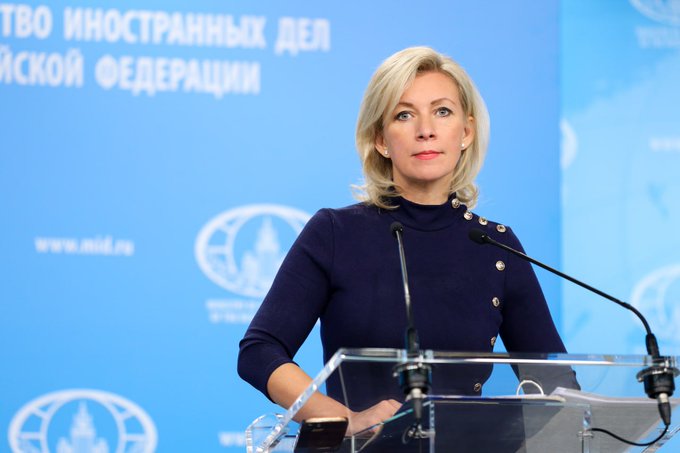
New Delhi, August 13, 2025 – As External Affairs Minister S. Jaishankar prepares to meet Russian Foreign Minister Sergey Lavrov in Moscow on August 21, 2025, India appears to be doubling down on its historic alliance with Russia. The visit, confirmed by Russia’s Foreign Ministry on August 13, comes at a pivotal moment- the United States has imposed punitive tariffs on Indian exports, citing New Delhi’s continued trade with Moscow, while Pakistan’s Army Chief, Field Marshal Asim Munir, has issued unprecedented nuclear threats against India from U.S. soil.
A Deepening India-Russia Partnership
India’s relationship with Russia, rooted in decades of Soviet-era cooperation, has been a cornerstone of its foreign policy. The upcoming Jaishankar-Lavrov meeting is expected to advance bilateral trade, which reached $65 billion in 2024-25, with a target of $100 billion by 2030. Discussions will likely focus on energy deals, defense cooperation, and coordination within BRICS and the Shanghai Cooperation Organization (SCO). In the face of economic sanctions pressed by EU and USA on Russia since the war broke, India emerged as one of the largest importer of Russian Crude ignoring displeasures of Europe and USA and securing energy needs for its 1.4 billion population at a cheaper price. Russia remains India’s top oil supplier, with imports hitting 1.97 million barrels per day in July 2025, a critical factor in stabilizing India’s energy costs amid global volatility.

The success of the Russian-supplied S-400 air defense system in Operation Sindoor on May 15, 2025—when India claims it shot down five Pakistani jets has reaffirmed reliability the Russian armaments . In a recent remark Indian Air Chief Marshal A. P. Singh underlined that S-400 has registered a hit at over 300 km in Pakistan airspace, the longest kill ever recorded in wartime. There have been multiple media reports suggesting keenness in Indian side to increase the number of S-400 which has now proven its battle worthiness. Air Chief Singh, on May 17, 2025, called the S-400 a “game-changer,” prompting India to request two additional batteries and explore upgrades to the S-500 system.
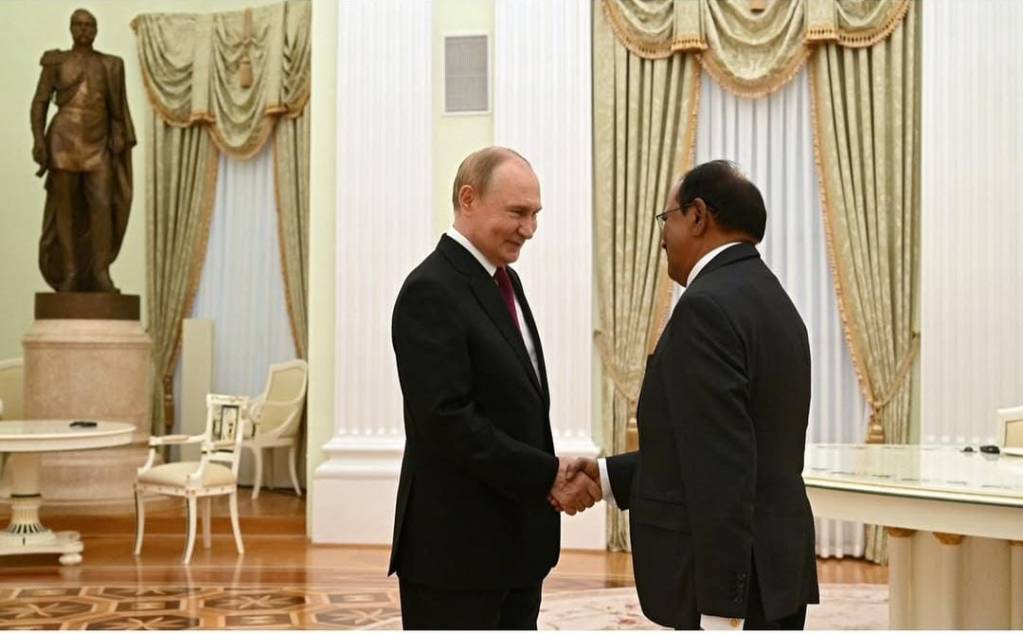
The timing of Jaishankar’s visit is significant. It follows National Security Advisor Ajit Doval’s August 7, 2025, trip to Moscow, where he met President Vladimir Putin and Security Council Secretary Sergei Shoigu. Doval’s discussions, held just a day after the U.S. announced tariffs, focused on sustaining oil imports and expanding joint defense production, including AK-203 rifles and potential nuclear energy projects. Russia’s offer of deeper oil discounts during the visit underscored its commitment to India as a counterbalance to Western pressure.
These engagements build on Prime Minister Narendra Modi’s meetings with Putin on July 8-9, 2024, during the 22nd India-Russia Summit, and October 22, 2024, at the BRICS Summit in Kazan, where both leaders reaffirmed their “special and privileged strategic partnership” and advocated for a multipolar world order.
U.S. Tariffs: A Catalyst for India’s Pivot?
The U.S. decision to impose a 25% tariff on all Indian exports, effective August 7, 2025, with an unspecified penalty for India’s Russian oil and weapons purchases, has strained bilateral ties. Announced by President Donald Trump on July 30, 2025, the tariffs could escalate to 50% by August 27 if India does not comply with U.S. demands to curb its Moscow ties. The move, which Trump justified as a response to India’s defiance of sanctions on Russia, threatens $10 billion in annual trade losses, particularly in pharmaceuticals ($25 billion in U.S. exports) and diamonds ($2 billion). Indian Commerce Minister Piyush Goyal, on August 8, 2025, called the tariffs “unilateral and unfair,” arguing they violate World Trade Organization norms and ignore India’s energy security needs for its 1.4 billion people.
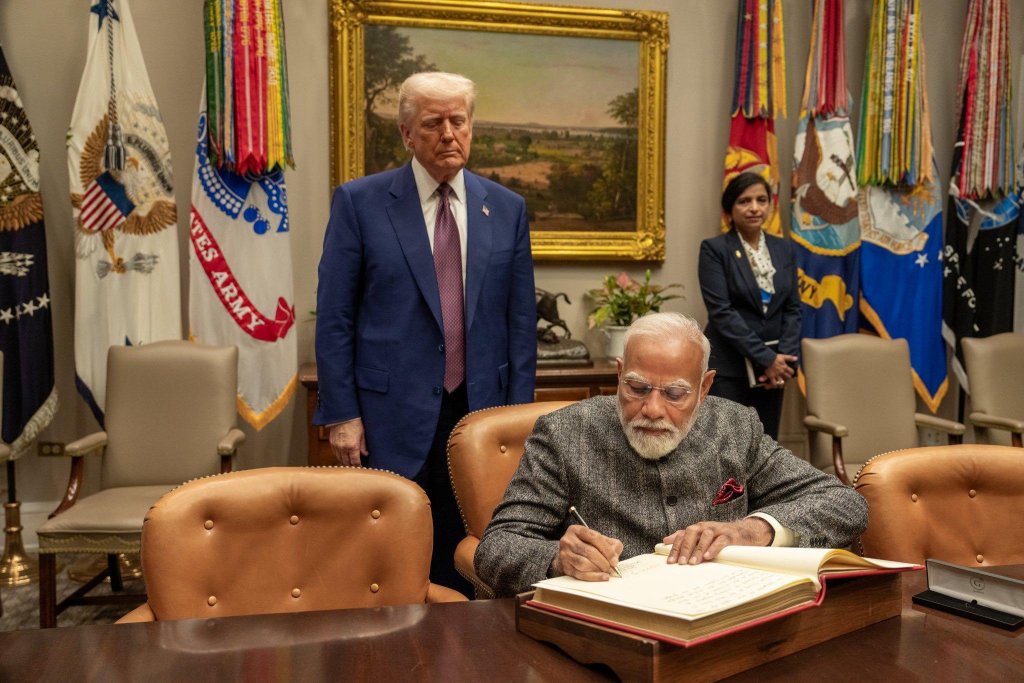
The Ministry of External Affairs echoed this sentiment, noting that other nations engage in similar trade without facing penalties.The tariffs reflect broader U.S. frustration with India’s neutral stance on the Russia-Ukraine conflict. India’s refusal to condemn Moscow outright, coupled with its humanitarian outreach to Ukraine—evidenced by Modi’s August 23, 2024, visit to Kyiv and a $50 million aid package—has irked Washington. Posts on X suggest the U.S. views India’s strategic autonomy as a challenge to its China containment strategy, with some analysts arguing that Washington seeks to keep India within a “controllable orbit.” The tariffs, combined with Trump’s reported trade deal with Pakistan, announced on June 19, 2025, signal a shift in U.S. policy that appears to favor Rawalpindi over New Delhi, pushing India to lean on its reliable Russian ally.
Deepening Washington-Rawalpindi Ties
In Pakistan, the military has long been the de facto power center, and Field Marshal Asim Munir is taking this influence to new heights. His two visits to the U.S. in less than two months—on June 18, 2025, for a private luncheon with Trump, and on August 8, 2025, for the U.S. Central Command (CENTCOM) change-of-command ceremony in Tampa—mark an extraordinary engagement. During the June visit, Munir nominated Trump for the Nobel Peace Prize for “averting a nuclear war” between India and Pakistan, a claim New Delhi has rejected. The August visit saw Munir deliver unprecedented nuclear threats against India at a private dinner hosted by Pakistani-American businessman Adnan Asad in Tampa.
According to reports, Munir declared, “We are a nuclear nation. If we think we are going down, we’ll take half the world down with us,” and threatened to destroy Indian dams with “10 missiles” if New Delhi builds on the Indus River, citing the suspension of the Indus Waters Treaty.Munir’s rhetoric, delivered on U.S. soil, was timed provocatively, coinciding with the 80th anniversary of the U.S. atomic bombing of Nagasaki on August 9, 1945. His remarks, which also mocked India as a “shining Mercedes” vulnerable to Pakistan’s “dump truck full of gravel,” were aimed at rallying domestic hardliners and unsettling India amid its economic tensions with the U.S. Munir’s August 5, 2025, threat to target India’s eastern corridor via Bangladesh, as reported on X, further escalated concerns about Pakistan’s aggressive posturing. Indian leaders, including Shiv Sena MP Priyanka Chaturvedi and BJP’s Gourav Vallabh, condemned Munir’s statements as “cowardly” and urged the International Atomic Energy Agency to address Pakistan’s nuclear arsenal. Retired Major General P.K. Sehgal warned on August 10, 2025, that any nuclear action by Pakistan would be “physical suicide,” given India’s superior military capabilities.
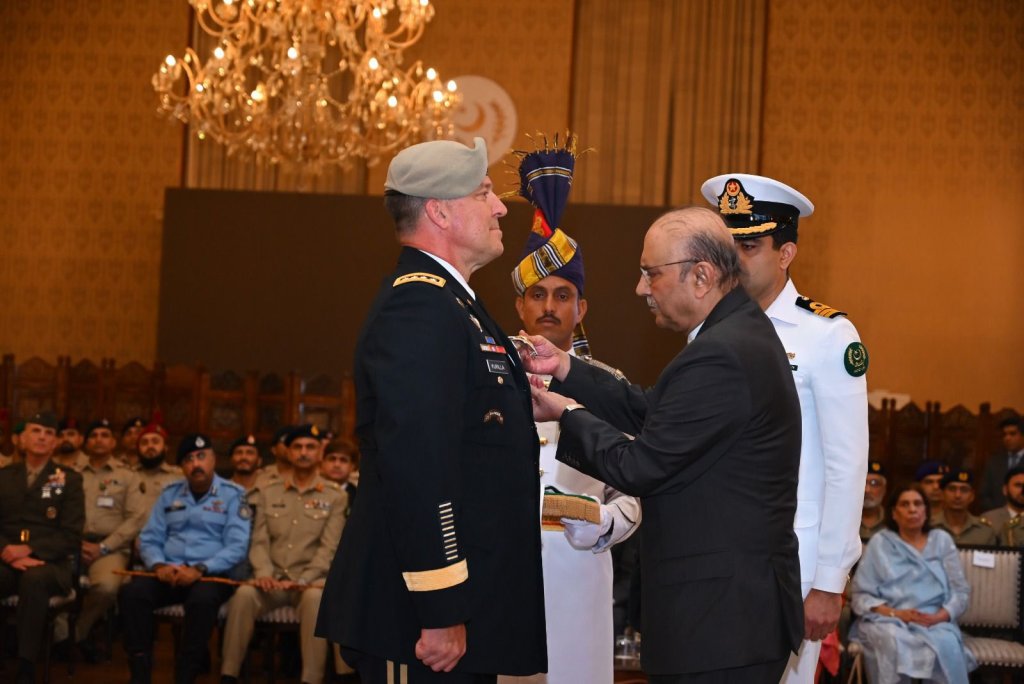
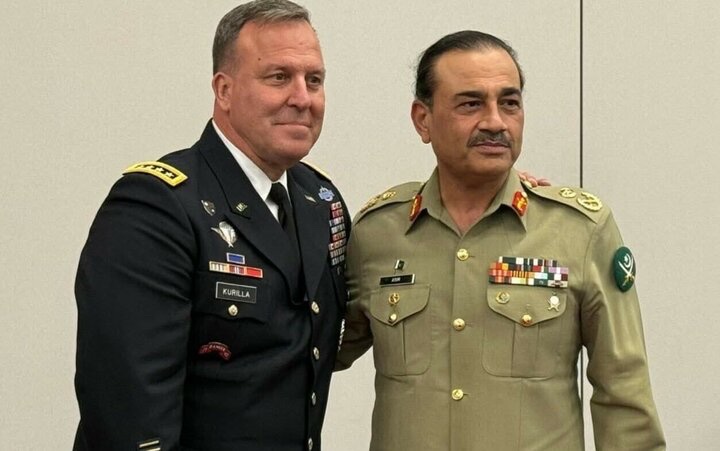
Earlier in July, Pakistan bestowed one of the highest award to US CENTCOM Chief. In a high-profile ceremony Pakistani President Asif Ali Zardari awarded US CENTCOM Chief, General Michael Kurilla the Nishan-e-Imtiaz (Military). This is one of Pakistan’s highest honours, that recognised Kurilla’s role in “strengthening US-Pakistan defence ties, counterterrorism, and regional security.”
Western Hypocrisy: Silence on Munir’s Threats
The U.S. response to Munir’s nuclear threats has been conspicuously muted. State Department spokesperson Tammy Bruce, on August 12, 2025, reaffirmed that U.S. ties with both India and Pakistan “remain unchanged,” emphasizing diplomatic commitment to both nations without addressing Munir’s remarks. U.S. media outlets, including The Washington Post and The Economist, have noted a “shift” in U.S. foreign policy toward Pakistan but failed to criticize Munir’s rhetoric, focusing instead on India’s Russian ties and economic vulnerabilities. This silence stands in stark contrast to the West’s vocal condemnation of nuclear posturing by other states, such as North Korea or Iran, exposing a double standard. The U.S. Joint Chiefs of Staff, on August 8, 2025, described the U.S.-Pakistan military partnership as “necessary for nuclear security in South Asia,” a statement that alarmed New Delhi given Munir’s threats.
India’s Strategic Realignment: Back to Russia?
The convergence of U.S. tariffs, Pakistan’s provocations, and Western silence has fueled speculation that India is falling back on its old ally, Russia, to counter these challenges. Russia’s reliability as a defense and energy partner stands in contrast to the U.S.’s punitive measures and apparent tolerance of Pakistan’s belligerence. President Putin’s planned visit to India later this year will likely finalise agreements on joint defense production and Arctic energy projects, further deepening ties. Modi’s balanced diplomacy—evidenced by his August 2024, Kyiv visit and phone-call with Zelensky last week ahead of Trum-Putin Meeting in Alaska on 15th August, shows India’s intent to maintain global credibility while strengthening its Russian partnership. The S-400’s success in Operation Sindoor underscores Russia’s role as a trusted defense supplier, unlike the U.S., which has threatened sanctions over the same system under CAATSA.

The economic rationale is equally compelling: Russian oil has saved India $20 billion in import costs since 2022, and deeper energy ties could shield New Delhi from U.S. tariff impacts.
Navigating a Multipolar World
India’s pivot toward Russia does not signal a rejection of the West but a pragmatic recalibration. The Modi government has maintained open channels with the U.S to discuss tariff mitigation. However, the U.S.’s cozying up to Pakistan’s military, coupled with its silence on Munir’s nuclear threats, has eroded trust. Indian analysts argue that Washington’s failure to call out Pakistan’s recklessness—while penalizing India for its energy choices—reflects a broader systemic shift in Trump’s foreign policy for South Asia.
As Jaishankar heads to Moscow, India is signaling its refusal to be boxed in by Western pressure or Pakistan’s provocations. By strengthening ties with Russia, New Delhi is not only securing its economic and security interests but also asserting its role as an independent power in a multipolar world. The US and West’s selective outrage on India-Russia trade, while conveniently forgetting its ongoing energy trade with Russia and US’s continued import of nuclear fuel, chemical and fertilizers from Russia are a stark reminder of West’s decades of hectoring to the world about ethics and righteousness, while furthering its own economic and strategic agenda around the world ignoring the same virtues.