
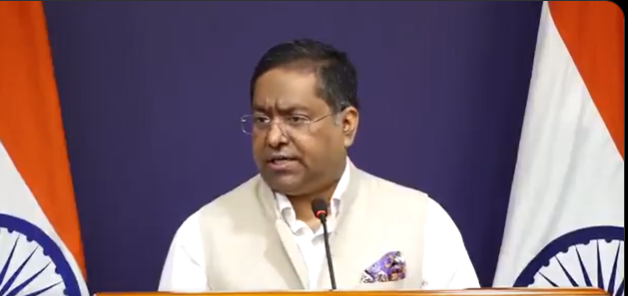
New Delhi, August 15, 2025 – India has said that defence partnership with U.S. remains a key pillar of the strategic relationship, even as trade disputes strain ties. Ministry of External Affairs spokesperson Randhir Jaisawal said, “The India–U.S. defence partnership, underpinned by foundational defence agreements, is an important pillar of the bilateral partnership. This robust cooperation has strengthened across all domains.” A U.S. Defence Policy Team will visit Delhi this month, and the 21st Yudh Abhyas joint military exercise is set for Alaska. Jaisawal added, “We are expecting a U.S. Defence Policy Team to be in Delhi in mid-August. The 21st edition of the joint military exercise – Yudh Abhyas is also expected to take place later this month in Alaska. Both sides remain engaged to convene the 2+2 Intersessional meeting at the working-level towards the end of the month.”
India’s strategic partnership with the United States faces headwinds from President Trump’s 50% tariffs on Indian exports, effective August 27, citing India’s Russian oil purchases, and Washington’s growing ties with Pakistan.
In the face of instigating remarks from President Trump and many of his cabinet colleagues, Indian response thus far, has been rather calm and measured. Stating that the partnership has, “weathered several transitions and challenges,” Ministry of External Affairs spokesperson Randhir Jaisawal highlighted the resilience of this bond, stating, “India and the United States share a comprehensive global strategic partnership anchored in shared interests, democratic values, and robust people-to-people ties. This partnership has weathered several transitions and challenges.” He further emphasized, “We remain focused on the substantive agenda that our two countries have committed to and we hope that the relationship will continue to move forward based on mutual respect and shared interests.”
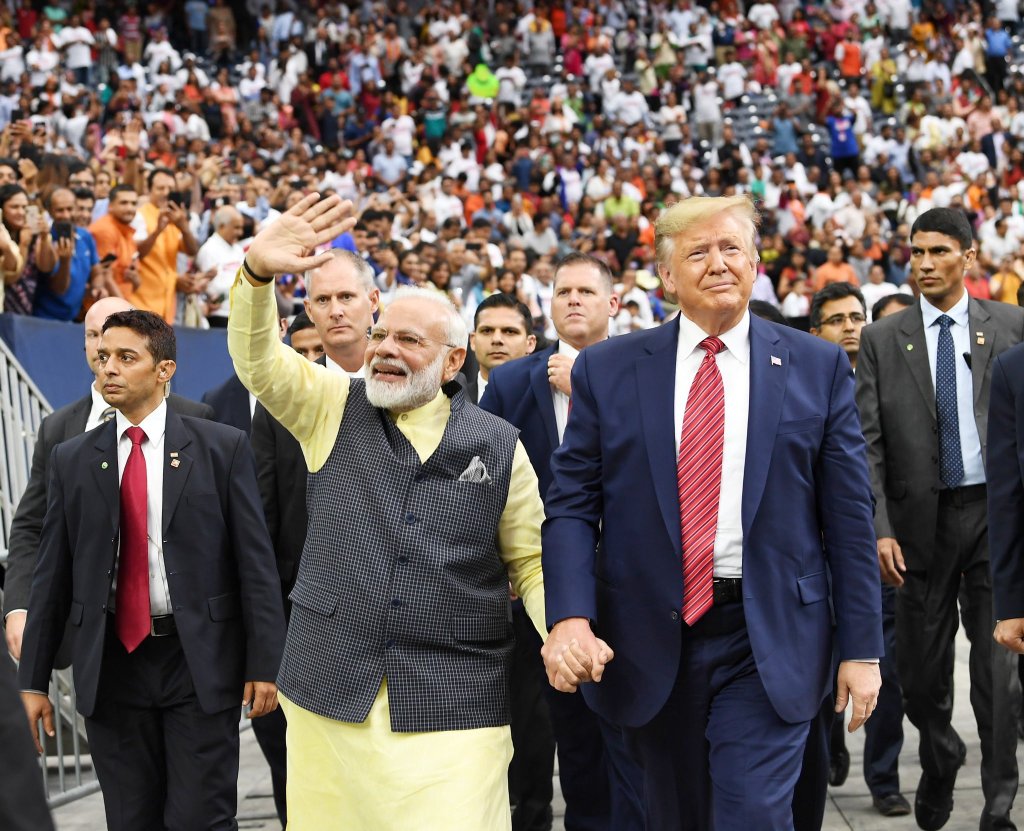
The once-strong personal rapport between Prime Minister Narendra Modi and President Donald Trump seems to have frayed, with Trump imposing a 50% tariff on Indian exports on August 6, including a 25% punitive levy targeting India’s Russian oil purchases, which the U.S. claims fuel Russia’s actions in Ukraine. Effective August 27, these tariffs endanger India’s $86 billion export market, hitting textiles, jewelry, and pharmaceuticals hard. Indian officials have slammed the tariffs as “unfair and unreasonable,” prompting Modi to hold urgent cabinet meetings to strategize a response. The warmth of the 2019 “Howdy Modi” event, where Trump and Modi showcased their camaraderie, has faded.
Meanwhile, Last month, the U.S. signed an agreement to develop Pakistan’s oil reserves, with Trump suggesting Pakistan could one day supply oil to India. This came after high-profile US-Pakistan engagements, including a White House meeting of Pakistan’s army chief, General Asim Munir with President Trump, raising concerns in New Delhi.
These initiatives, including the Yudh Abhyas exercise, signal a commitment to sustaining strategic alignment. As both nations navigate trade disputes and geopolitical shifts, the path forward depends on balancing mutual interests with India’s strategic autonomy.