
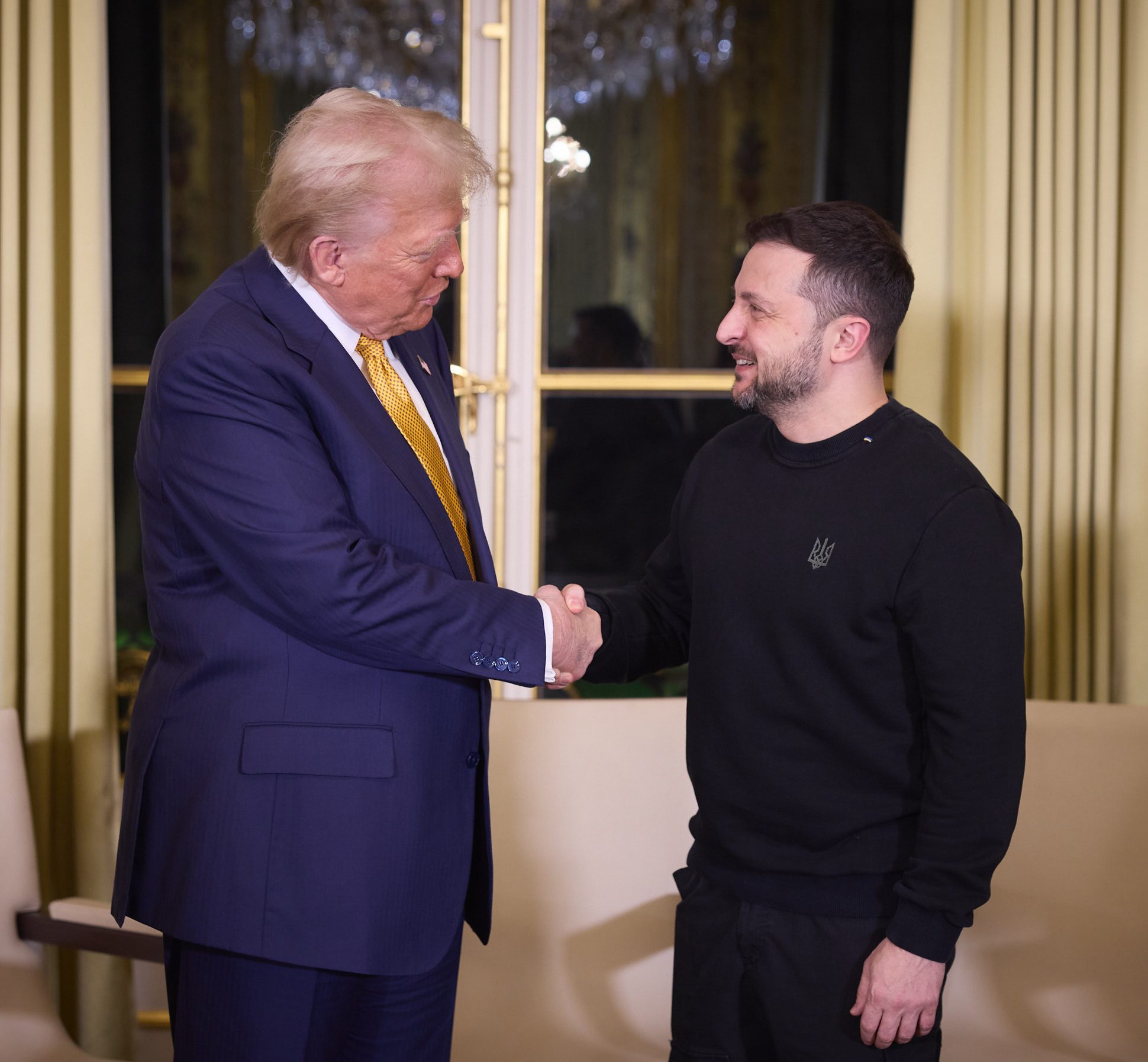
The transatlantic partnership stands at its most precarious juncture in decades, perhaps since NATO’s formation in 1949. U.S. President Donald Trump’s scathing remarks against Europe for “failing to bring peace,” accusations of siphoning funds sent to Ukraine, and branding Ukrainian President Volodymyr Zelenskyy as “a dictator without elections” have shaken the foundations of the eight-decade-long U.S.-Europe strategic alliance.

The transatlantic partnership stands at its most precarious juncture in decades, perhaps since NATO’s formation in 1949. U.S. President Donald Trump’s scathing remarks against Europe for “failing to bring peace,” accusations of siphoning funds sent to Ukraine, and branding Ukrainian President Volodymyr Zelenskyy as “a dictator without elections” have shaken the foundations of the eight-decade-long U.S.-Europe strategic alliance.
On Truth Social, Trump labeled Zelenskyy “a dictator without elections,” warning, “Zelenskyy better move fast, or he is not going to have a country left.” He accused the Ukrainian leader of mismanaging the war, claiming, “Zelenskyy admits that half of the money we sent him is ‘MISSING.’ He refuses to have elections, is very low in Ukrainian polls, and the only thing he was good at was playing Biden ‘like a fiddle.’” Trump further asserted, “I love Ukraine, but Zelenskyy has done a terrible job, his country is shattered, and MILLIONS have unnecessarily died,” echoing Kremlin narratives and fueling outrage across Europe.
https://x.com/realDonaldTrump/status/1892242622623699357
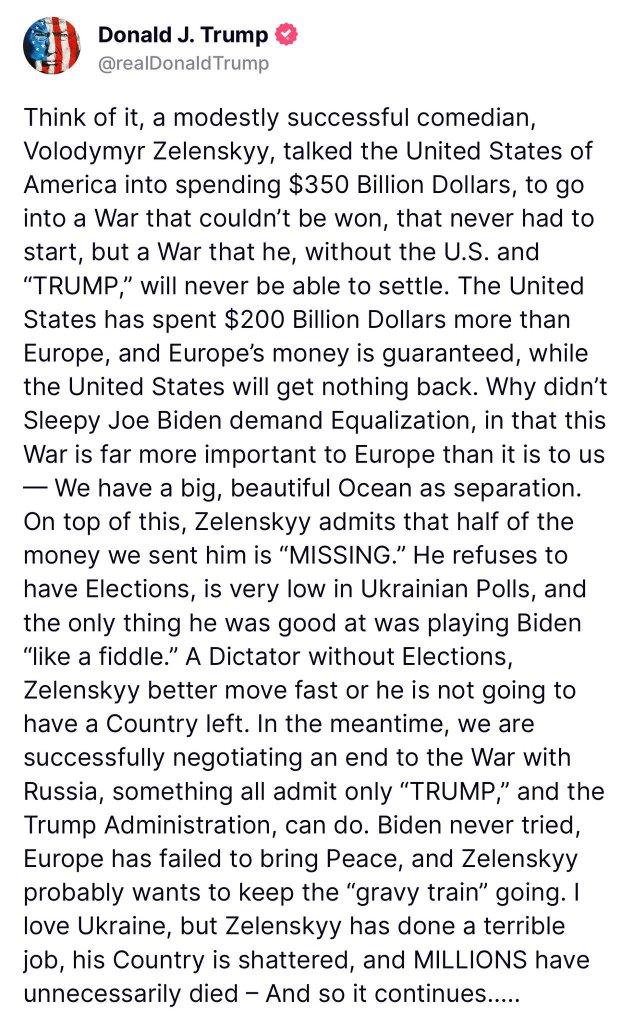
Trump’s broader indictment of Europe is equally explosive. He declared the Ukraine war “far more important to Europe than it is to us,” arguing, “We have a big, beautiful ocean as separation,” effectively signaling U.S. disengagement from European security. He lambasted Europe for “failing to bring peace,” insisting, “Biden never tried, Europe has failed to bring peace, and Zelenskyy probably wants to keep the ‘gravy train’ going.” Boasting that only “TRUMP” and his administration can end the conflict, he claimed the U.S. has spent over $200 billion on Ukraine, contrasting this with what he calls guaranteed European contributions, while warning, “We will get nothing in return.”
European leaders have openly defended the Ukrainian president. German Chancellor Olaf Scholz wrote on X, “Volodymyr Zelenskyy is the elected head of state of Ukraine. The fact that regular elections cannot be held in the middle of a war is in line with the requirements of the Ukrainian constitution and electoral laws. No one should claim otherwise.”
The leader of the UK’s opposition Conservative Party, Kemi Badenoch, posted on X, “President Zelenskyy is not a dictator. He is the democratically elected leader of Ukraine who bravely stood up to Putin’s illegal invasion.”
A French government spokesperson, Sophie Primas, expressed bewilderment at Trump’s logic, calling his Ukraine-related comments “incomprehensible.”
These remarks, building on Trump’s first-term threats (2017–2021) to withdraw from NATO unless allies paid more, have morphed into action in his second term. U.S.-Russia talks in Riyadh, excluding Europe and Ukraine, have left allies scrambling. With Russia’s aggression in Ukraine now in its third year, Europe fears losing not just Kyiv but its own stability.
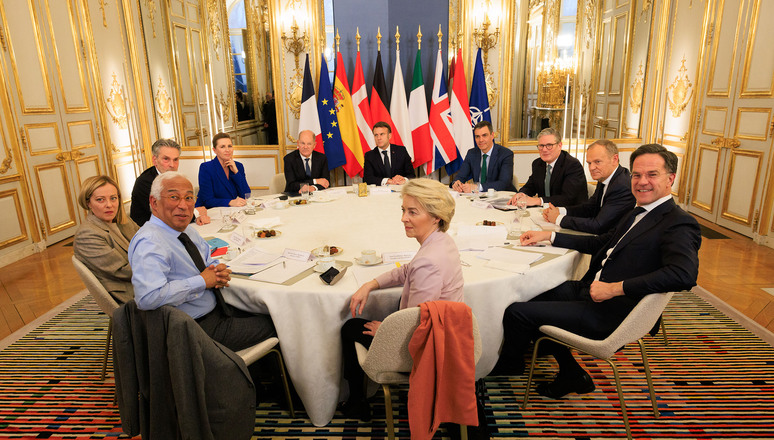
Europe’s response is frantic but fractured. On February 17, 2025, French President Emmanuel Macron hosted a summit in Paris with leaders from Germany, Italy, Spain, Poland, Denmark, and the UK to counter U.S. moves. They vowed a €6 billion military aid package for Ukraine and accelerated the European Defence Fund (EDF), an €8 billion initiative to reduce reliance on the U.S. However, divisions persist: Macron and UK Prime Minister Keir Starmer push for bold moves like sending troops to Ukraine as part of a European peacekeeping force, while German Chancellor Olaf Scholz deems the idea premature. Hungary and Slovakia have expressed hesitation, fearing escalation.
The scale of this crisis is unprecedented since NATO’s founding. Never before has the alliance faced such a direct challenge from within its leading power, nor has the U.S. so openly questioned its role as Europe’s security guarantor. During the Cold War, despite tensions, the U.S. and Europe maintained a united front against the Soviet Union. Even during the Iraq War or Trump’s first term, when trade tariffs on European steel and aluminum sparked outrage, the alliance held together through shared threats. Zelenskyy’s call for a “European army” and the use of frozen Russian assets for aid reflect desperation, but Trump’s dismissal—“Europe has failed to bring peace”—undermines decades of cooperation.
As Europe scrambles to fill the void, one question looms: Can it survive without the U.S., or will Trump’s vision of a self-reliant America leave the West fractured and vulnerable?