
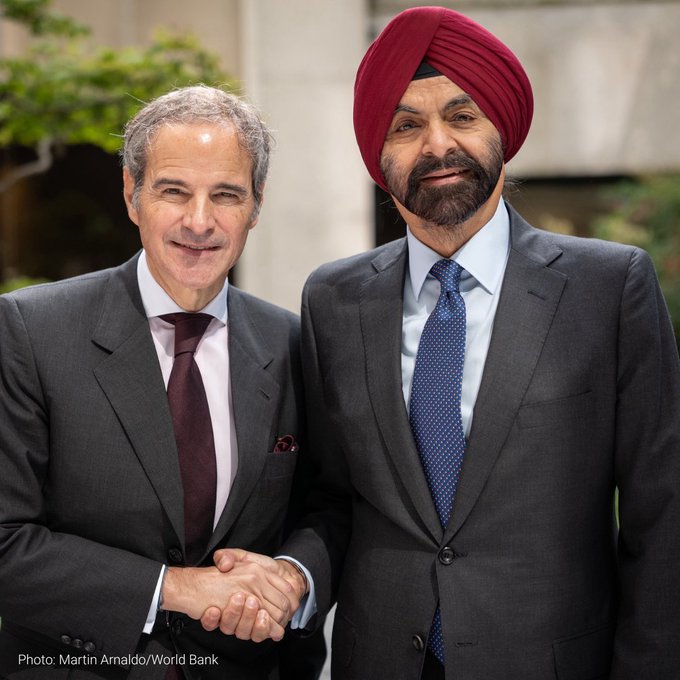
In a landmark move to address the surging energy demands of developing nations, the World Bank Group and the International Atomic Energy Agency (IAEA) signed a memorandum of understanding on June 26, 2025, to promote the safe, secure, and responsible use of nuclear energy. The agreement, formalized by World Bank Group President Ajay Banga and IAEA Director General Rafael Mariano Grossi, marks the World Bank Group’s first significant step toward reengaging with nuclear power in decades.
The partnership reflects a broader, pragmatic approach by the World Bank Group to electrification, prioritizing accessibility, affordability, and reliability while responsibly managing emissions. With electricity demand in developing countries projected to more than double by 2035, this collaboration aims to empower nations to meet their energy needs in alignment with their development goals and Nationally Determined Contributions under global climate agreements.

“Jobs need electricity. So do factories, hospitals, schools, and water systems. And as demand surges—with AI and development alike—we must help countries deliver reliable, affordable power,” said World Bank Group President Ajay Banga. “That’s why we’re embracing nuclear energy as part of the solution—and reembracing it as part of the mix the World Bank Group can offer developing countries to achieve their ambitions. Importantly, nuclear delivers baseload power, which is essential to building modern economies. Our partnership with the IAEA marks an important step, and I’m grateful to Rafael for his personal commitment and leadership in making this possible. Together, we’ll deepen our expertise, support countries that choose nuclear, and ensure that safety, security, and sustainability guide every step forward.”
The agreement outlines three key areas of cooperation. First, the IAEA will help the World Bank Group build expertise in nuclear safety, security, safeguards, energy planning, new technologies, fuel cycles, reactor lifecycles, and waste management. Second, the partnership will support developing countries in extending the lifespan of existing nuclear power plants, a cost-effective source of low-carbon energy as many reactors approach the end of their original 40-year design life. Third, the collaboration will focus on advancing small modular reactors (SMRs), which offer flexible deployment, lower upfront costs, and significant potential for adoption in developing economies.
“SMRs have great potential to cleanly and reliably power progress and fight poverty, but financing remains a roadblock,” said IAEA Director General Rafael Mariano Grossi. “Today’s agreement is a crucial first step to clearing that path.”
Nuclear energy, which provides continuous baseload power, enhances grid stability and supports the integration of variable renewable energy sources. It is also a catalyst for economic growth, creating high-skilled jobs and stimulating investment in sectors such as infrastructure, agribusiness, healthcare, tourism, and manufacturing. Currently, 31 countries operate nuclear power plants, generating about 9% of global electricity and nearly a quarter of the world’s low-carbon power. Over 30 additional countries, primarily in the developing world, are exploring nuclear energy and working with the IAEA to establish the necessary infrastructure.
“Today’s agreement is a milestone and the result of a year of joint work since President Ajay Banga kindly invited me to the World Bank Group Executive Board in Washington in June of last year,” Grossi added. “This landmark partnership, yet another sign of the world’s return to realism on nuclear power, opens the door for other multilateral development banks and private investors to consider nuclear as a viable tool for energy security and sustainable prosperity. Together, we can help more people build a better future.”
The partnership signals a shift in global energy strategies, recognizing nuclear power’s role in meeting the dual challenges of energy security and climate change while fostering sustainable development in emerging economies.